RAGRAG engineers / AI search / Grounded LLM systems

Hire Nearshore RAG Engineers - Pre-Vetted, In Your Time Zone

Senior LATAM RAG engineers who build reliable AI over your documents, knowledge bases, support content, product data, and internal tools. Retrieval architecture, vector databases, hybrid search, reranking, citations, evals, and access-safe answers. Vetted by AI engineers, embedded into your team in under 14 days.

  • 5.0 on Clutch
  • 150+ US teams served
  • Top 1% of RAG candidates pass our vetting
Trusted talent for teams at
CarGurus logoWalmart logoWhole Foods Market logoLucid logoWestern Mutual logoCarGurus logoWalmart logoWhole Foods Market logoLucid logoWestern Mutual logoCarGurus logoWalmart logoWhole Foods Market logoLucid logoWestern Mutual logo
5.05.0 on Clutch
150+ US teamsserved across SaaS, fintech, health, and AI products
Top 4%of RAG candidates pass our production vetting
What you are hiring for

What does a senior RAG engineer actually do in 2026?

A senior RAG engineer designs and operates retrieval-augmented generation systems: the architecture that lets an LLM answer from your private knowledge instead of guessing. The role sits between search engineering, data engineering, and LLM product engineering. Their job is to make the right context reach the model, prove the answer is grounded, and keep the system reliable as your corpus changes.

A senior RAG engineer's defining skill is knowing whether the failure came from retrieval, ranking, generation, permissions, or stale data.

That diagnostic judgment is exactly what we test for.

On a typical week, a senior RAG engineer might:

  • Design and ship a retrieval-augmented generation pipeline over a proprietary document corpus, including ingestion, chunking, embeddings, retrieval, reranking, and response grounding.
  • Choose the right retrieval strategy for the use case: vector search, keyword search, hybrid search, metadata filtering, graph retrieval, or a layered combination.
  • Build ingestion pipelines that keep documents fresh, permission-aware, deduplicated, and traceable back to source systems.
  • Create RAG evals that measure answer correctness, context relevance, citation quality, refusal behavior, and retrieval regressions before they reach production.
  • Tune chunking, embedding models, query rewriting, and rerankers when users complain that the answer is close but not useful.
  • Implement citations, source previews, confidence signals, and fallbacks so users can trust the answer instead of treating the assistant like a black box.
  • Harden the system against prompt injection, permission leakage, PII exposure, stale knowledge, and hallucinated citations.
  • Track latency, retrieval quality, token usage, and vector database cost, then optimize the pipeline without degrading answer quality.
Role clarity

RAG Engineer vs LLM Engineer vs ML Engineer - what to actually hire

The titles overlap, but the roadmap usually tells you what to hire. If the product needs trustworthy answers over a changing knowledge base, retrieval depth matters. See all AI engineering specialties when you need the broader map, or hire an LLM engineer if your work is broader than retrieval.

RoleBest fit when...Typical scope
RAG EngineerYour AI product needs reliable answers over proprietary documents, support content, product catalogs, legal files, clinical records, policies, or internal knowledge bases.Document ingestion, chunking, embeddings, vector databases, hybrid search, reranking, citations, access control, RAG evals, and production observability.
LLM EngineerYou need a broader language-model builder across prompts, structured outputs, agents, fine-tuning, guardrails, and model integration.Prompt design, tool use, RAG, evals, fine-tuning when ROI is clear, cost controls, and production LLM orchestration.
ML EngineerYou have proprietary labeled data and a reason to train or operate custom models beyond retrieval and LLM orchestration.Training pipelines, model selection, feature stores, evaluation, deployment, drift monitoring, and production ML infrastructure.
Search / Relevance EngineerThe problem is search quality first, and generation is secondary or not needed at all.Indexing, lexical search, ranking, relevance tuning, query understanding, analytics, and search experimentation.
Common hiring mistakes

How RAG hiring goes sideways

Mistake 1: Treating RAG like a vector database install.

A vector database is not the system. The hard parts are chunking, permissions, ingestion freshness, query rewriting, reranking, evals, and proving that the retrieved context actually answers the user.

Mistake 2: Hiring a general LLM engineer when retrieval is the bottleneck.

A strong LLM engineer may know RAG, but a RAG specialist spends most of their time on search quality, grounding, source trust, and corpus behavior. That depth matters when every bad answer is a retrieval failure.

Mistake 3: Shipping without evals and citations.

RAG systems feel convincing even when they are wrong. Without evals, source-backed citations, and regression checks, teams do not know whether a prompt tweak improved the system or quietly broke important answers.

2026 compensation reality

The real cost of hiring a senior RAG engineer in 2026

US salaries for senior AI search and RAG engineers are being pulled up by the broader LLM talent market. Nearshore LATAM engineers with real production retrieval experience give teams the same working-hour overlap and seniority at 40-55% of total cost.

US Senior (NY / SF)
US Senior (Other Metros)
LATAM Senior (Nearshore)
Base salary
$190K-$300K
$140K-$200K
$75K-$110K all-in
Total comp with equity/bonus
$300K-$400K+
$190K-$275K
Same as above
Time-zone overlap
Full
Full
Same hours (LATAM)
Time to first interview
3-4 weeks
3-4 weeks
72 hours (vetted bench)
Time to signed engagement
8-12 weeks
8-12 weeks
14 days
Equity expectation
Yes
Sometimes
No
Annual savings vs US senior
-
-
$70K-$190K per engineer
RAG is production AI infrastructure. The savings are real, but the deeper win is access to senior specialists who can debug retrieval failures, not just connect a vector database to a chatbot.
Skills matrix

Skills we vet for in every RAG engineer we place

We do not stop at "has used Pinecone." We test the retrieval, data, and production muscles that make grounded AI systems dependable.

Retrieval Architecture

Knows when to use vector search, hybrid search, metadata filters, graph retrieval, query expansion, or reranking instead of treating every corpus the same.

Chunking & Ingestion

Designs document parsing, chunk boundaries, deduplication, access controls, incremental indexing, and source traceability for real enterprise corpora.

Embeddings & Vector Databases

Hands-on with Pinecone, Weaviate, Qdrant, Chroma, pgvector, OpenSearch, and embedding model tradeoffs around cost, latency, and recall.

Hybrid Search & Reranking

Combines lexical and semantic retrieval, then uses rerankers and query rewriting to improve answer quality instead of blindly adding more context.

RAG Evals & Observability

Builds golden datasets, retrieval metrics, answer-quality rubrics, trace inspection, and regression tests in LangSmith, Braintrust, or custom systems.

Grounding, Citations & Safety

Implements source-backed answers, refusal behavior, PII handling, prompt-injection defenses, permission-aware retrieval, and hallucination checks.

Cost & Latency Optimization

Controls vector database spend, embedding jobs, reranker calls, token windows, caching, and model routing without hiding quality regressions.

Communication

C1/C2 English. Can explain why a RAG answer failed, whether the problem is retrieval or generation, and what to fix first.

Vetting framework

How we vet RAG engineers

The question bank from 2019 will not filter RAG candidates correctly in2026. Our process tests retrieval judgment: corpus shape, chunking, metadata, source trust, eval design, latency, cost, and whether the engineer can work inside your real delivery process.

Step 2 is RAG-specific. Candidates design a retrieval pipeline live from a document corpus and eval set. We want to see how they reason, not just what vector stores they can name.
Step 01

Production Portfolio Review

We look for shipped production RAG or AI search systems, not notebook demos. We want messy corpora, real users, access rules, latency constraints, and systems that survived production.

Step 02

RAG-Specific Assessment

Every RAG engineer candidate is handed a document corpus and eval set, then asked to design a retrieval pipeline live. We watch chunking, embedding choices, retrieval strategy, citation design, eval discipline, and failure analysis.

Step 03

Live Coding & Design Session

We watch how they reason through ingestion, indexing, API boundaries, edge cases, monitoring, and what they would ship first.

Step 04

Communication & Time-Zone Sync

We confirm fluent business English, async-writing skill, and meaningful US working-hour overlap for standups, pairing, planning, and code review.

Step 05

Background & Reference Check

We confirm their track record with real references - past tech leads, not friends - and look for the habits that make remote engineering work.

Step 06

Onboarding & Ongoing Compliance

We handle payroll, IP assignment, NDAs, and local-labor-law compliance in LATAM, then keep a close feedback loop after placement.

Customer signal

Real engineers. Real teams. Real reviews.

Founder-led staffing for teams that need production AI engineers who can move inside real codebases and ambiguous product constraints.

"They built guardrails, payments, and UX faster than I could explain the next idea."

Next Idea Tech turned my hacked-together prototype into something investors and customers actually trust. They owned the UX, dev, and infra like an in-house team.

Leo F.
Leo F.
Founder, Radar

"They are always communicative and keeps us abreast of any obstacles that they face"

Despite the complexity of the project's requirements, the team has been able to follow deadlines. They also show strong coordination skills even with multiple stakeholders. Above all, Next Idea Tech, Inc provides competent developers to ensure seamless collaboration.

Courtney S.
Courtney S.
CEO, Officer Reports

"Their professionalism and the timeliness of delivery most impressed us."

Next Idea Tech, Inc guided an efficient process to deliver valuable insight that supports business goals. The team provided one point of contact who communicated effectively. A capable team, they produced work that satisfied expectations.

John C.
John C.
CTO, The Peak Beyond

"Their ability to truly listen to our needs was commendable."

The team's deliverables and solutions have made it possible for the client to more effectively and efficiently run their business. Their ability to listen to project requirements and reflect them in a final product was refreshing for the company. The project manager was skilled and professional.

Brian R.
Brian R.
Director of Email Marketing, Arizent

"I have been impressed by their customer focus and quality of work."

...Next Idea Tech produces high-quality code and communicates with in-house staff on a daily basis to streamline the work. They're a transparent team that gives projects the utmost attention, making clients feel like they're the only ones they're tending to.

Christian N.
Christian N.
Senior Director of Product Engineering, yprime

"Their level of professionalism and their quick delivery was very impressive."

Since the company partnered with the Next Idea team they've noticed an increase in engagement from their audience. Visitors to the website often return and find the platform easier to navigate. The company was most impressed by the team's professionalism throughout the project.

Hannah C.
Hannah C.
Executive Board Chair, BYHP

"We reduced our food costs by 9% in the first month alone."

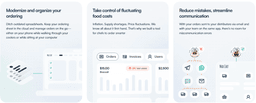
MadChef completely changed how we handle our inventory. We're finally seeing where every dollar goes and saving thousands every month. The integration with QuickBooks and our distributor price sheets is seamless. It's the only tool we use daily to protect our margins.

Amelia R.
Amelia R.
Owner, Amelia's Restaurant
5.0
Average Rating
👥
150+
Happy Clients
🚀
200+
Projects Delivered
Frequently asked

Frequently asked about hiring nearshore RAG engineers

Short answers for the retrieval, grounding, and role-fit questions buyers ask before they commit to a hiring path.

What is the difference between a RAG engineer and an LLM engineer?
A RAG engineer is a retrieval specialist. They focus on document ingestion, search quality, embeddings, vector databases, reranking, citations, and evals for grounded answers. An LLM engineer is broader across prompts, model integrations, agents, structured outputs, fine-tuning, and production LLM behavior. If your main risk is answer quality over your own knowledge base, hire RAG.
Do I need a RAG engineer if I already have a vector database?
Usually, yes. The vector database is one piece of the system. A senior RAG engineer designs the ingestion pipeline, chunking strategy, metadata model, permission handling, hybrid retrieval, reranking, evals, and user-facing grounding that make the database useful.
Which vector databases and frameworks do your RAG engineers know?
We vet for practical experience across Pinecone, Weaviate, Qdrant, Chroma, pgvector, OpenSearch, LangChain, LlamaIndex, LangGraph, and custom retrieval services. The best engineers can explain when not to use a framework and when plain application code is cleaner.
How long does it take to hire a senior RAG engineer through Next Idea Tech?
First interviews happen within 72 hours, and a signed engagement can be live in under 14 days. We maintain a pre-vetted LATAM bench, so we are not starting from a cold sourcing pipeline.
Can a RAG engineer work with regulated or permissioned documents?
Yes. We vet for permission-aware retrieval, PII handling, audit trails, source attribution, and access-control design. For regulated industries, we layer SOC2-aligned controls, NDAs, IP assignment, and data-handling constraints into the engagement.
What does a RAG engineer cost compared with a US senior engineer?
Senior US AI search and RAG specialists can reach $190K-$300K base in major markets, with total compensation much higher once equity and bonuses are included. Equivalent senior LATAM RAG engineers typically run $75K-$110K all-in including benefits and EOR fees.
Will the RAG engineer join our existing team and tools?
Yes. Nearshore staff augmentation means the engineer works in your repos, Slack, Jira, eval harness, CI, cloud account, and review process. They are embedded into your delivery rhythm from day one.

Get started

Tell us what you're building. We'll match in 72 hours.

One-paragraph brief on your product, corpus, stack, security needs, and timeline. We'll line up matched pre-vetted RAG engineers quickly, often within 72 hours.

  • First profiles in 72 hours
  • 14-day replacement or refund window
  • Direct line to the founder, no account-management layer
  • No spam, no long sales process
What are you hiring for?
Monthly budget per hire
Get matched with RAG engineers ->