LLMLLM engineers · GenAI · Applied AI

Hire Nearshore LLM Engineers — Pre-Vetted, In Your Time Zone

Senior LATAM LLM engineers — also called Generative AI or GenAI engineers — who ship production language model applications, not demos. Prompt engineering, RAG architecture, fine-tuning, evals, and cost-controlled inference. Vetted by AI engineers, embedded into your team in under 14 days.

  • 5.0 ★★★★★ on Clutch
  • 150+ US teams served
  • Top 4% of LLM candidates pass our vetting
Trusted talent for teams at
CarGurus logoWalmart logoWhole Foods Market logoLucid logoWestern Mutual logoCarGurus logoWalmart logoWhole Foods Market logoLucid logoWestern Mutual logoCarGurus logoWalmart logoWhole Foods Market logoLucid logoWestern Mutual logo
★★★★★5.0 on Clutch
150+ US teamsserved across SaaS, fintech, health, and AI products
Top 4%of LLM candidates pass our production vetting
What you are hiring for

What does a senior LLM engineer actually do in 2026?

A senior LLM engineer designs and ships production applications on top of large language models — Claude, OpenAI GPT, Llama, Mistral. The role is execution-focused, not research-focused. LLM engineers do not train foundation models from scratch; they orchestrate them. The work sits at the intersection of software engineering and applied AI: half traditional production engineering, half prompt and eval discipline.

A senior LLM engineer's defining skill is knowing when fine-tuning is and is not worth it. Better prompting and retrieval often beat a fine-tune on effort-adjusted ROI.

That trade-off is exactly what we test for.

On a typical week, a senior LLM engineer might:

  • Design and ship a retrieval-augmented generation (RAG) pipeline over a proprietary document corpus, including chunking strategy, embedding selection, hybrid search, and reranking.
  • Build an eval harness in LangSmith, Braintrust, or a custom framework that catches prompt regressions before they reach production.
  • Decide when fine-tuning makes sense versus when better prompting and retrieval will outperform it. The judgment call is the senior signal.
  • Fine-tune a small open-weight model using LoRA or QLoRA for a narrow, stable-distribution task where the ROI actually pencils.
  • Implement structured output handling, function calling, and tool use against Claude or OpenAI APIs.
  • Build guardrails: input validation, output filtering, PII redaction, and prompt injection defense.
  • Track token usage, GPU costs, and inference latency, then implement caching and model routing to control cost.
  • Run incident postmortems when an LLM endpoint degrades or a retrieval system drifts.
Role clarity

LLM Engineer vs ML Engineer vs AI Engineer — what to actually hire

The titles overlap and the market is confused. Half of failed AI placements trace back to a buyer hiring the wrong title for their actual roadmap. Here is the practical distinction we use when matching engineers to your needs. See all AI engineering specialties when you need the broader map, or hire an ML engineer instead if your roadmap is custom model training.

RoleBest fit when...Typical scope
LLM EngineerYou're shipping AI features on top of existing foundation models. You don't have proprietary training data, or you're not ready to invest in custom models.Prompt design, RAG, evals, fine-tuning of open-weight models where ROI is clear, cost and latency optimization.
ML EngineerYou have proprietary data and a business reason to build custom models: ranking, recommendation, fraud, forecasting.Data pipelines, training infrastructure, model selection, evaluation, deployment, and drift monitoring.
AI EngineerYou're early-stage, integrating AI into a product, and not sure yet which direction to go.Lighter-touch version of LLM engineering; broader in tooling, less depth in any single area.
Agentic AI EngineerYou're building autonomous multi-step workflows with agent loops, tool use, and state management.LangGraph, CrewAI, agent debugging, and observability for non-deterministic systems.
Common hiring mistakes

How good AI hiring goes sideways

Mistake 1: Hiring an ML engineer when you have no proprietary training data.

She spends six months doing data engineering work she did not sign up for, gets frustrated, and leaves. If you do not have clean labeled data yet, you need an LLM engineer who can ship value using RAG over your existing knowledge base.

Mistake 2: Hiring an LLM engineer and expecting model training.

She correctly identifies that a better prompt with better retrieval will outperform fine-tuning. That is not under-delivery; it is senior judgment. If you specifically need a model trained on proprietary data, you needed an ML engineer.

Mistake 3: Hiring one person to do both jobs.

The pool of engineers who have shipped both a production ML model with real ops rigor and a production LLM product with real evals is very small. Hire the specialist who matches your immediate roadmap, then add the other when you scale.

2026 compensation reality

The real cost of hiring a senior LLM engineer in 2026

US salaries for senior LLM and AI engineers have run hot. In major markets, senior specialists can push into the high six figures once equity and bonuses are included. Nearshore LATAM engineers with equivalent production experience and same-hours availability deliver the same technical output at 40-55% of total cost.

US Senior (NY / SF)
US Senior (Other Metros)
LATAM Senior (Nearshore)
Base salary
$200K-$310K
$145K-$200K
$75K-$110K all-in
Total comp with equity/bonus
$350K-$400K+
$200K-$280K
Same as above
Time-zone overlap
Full
Full
Same hours (LATAM)
Time to first interview
3-4 weeks
3-4 weeks
72 hours (vetted bench)
Time to signed engagement
8-12 weeks
8-12 weeks
14 days
Equity expectation
Yes
Sometimes
No
Annual savings vs US senior
-
-
$70K-$200K per engineer
The remote-AI salary premium is real. US teams hiring senior LLM engineers are competing nationally, not locally. LATAM nearshore gives teams senior production AI talent without paying the full remote-US premium.
Skills matrix

Skills we vet for in every LLM engineer we place

We do not stop at "has used OpenAI." We test the production muscles that separate a senior LLM engineer from a smart demo builder.

Prompt Engineering & Structured Outputs

Schema-constrained generation, function calling, tool use, and multi-turn state management across OpenAI, Anthropic, and open-weight inference APIs.

Retrieval-Augmented Generation (RAG)

Chunking strategy, embedding selection, hybrid retrieval, reranking, query understanding, and RAG-specific evals in Pinecone, Weaviate, Chroma, Qdrant, or pgvector.

Evals & Quality

Eval harness design, golden datasets, LLM-as-judge, and regression testing for non-deterministic systems with LangSmith, Braintrust, or custom pipelines.

Fine-Tuning When It Matters

Knows when fine-tuning helps and when it does not. Practical experience with LoRA, QLoRA, instruction tuning, and PEFT on Llama, Mistral, or Qwen.

Cost & Latency Optimization

Token accounting, caching, model routing, quantization, and inference serving with vLLM, TGI, or SGLang. Can take a large inference bill and cut it down.

Guardrails & Safety

Prompt injection defense, output filtering, PII handling, jailbreak resistance, and red-team-aware engineering for regulated environments.

Production Engineering

This is the line between a senior LLM engineer and a hobbyist: logging, observability, incident response, SLOs, and on-call discipline.

Communication

C1/C2 English. Can explain hallucinations, eval regressions, and why 'just fine-tune on more data' may not solve the problem.

Vetting framework

How we vet LLM engineers

The question bank from 2019 will not filter LLM candidates correctly in 2026. Our process tests production judgment: retrieval quality, eval discipline, failure modes, latency, cost, and whether the engineer can work inside your real delivery process.

Step 2 is LLM-specific. Candidates build a small RAG pipeline live from a document corpus and eval set. We want to see how they reason, not just what frameworks they can name.
Step 01

Production Portfolio Review

We look for shipped production AI, not notebook demos. We want real product work, messy constraints, user behavior, and systems that survived production.

Step 02

LLM-Specific Assessment

Every LLM engineer candidate is handed a real document corpus and eval set in their technical interview, then asked to build a small RAG pipeline live. We watch how they think about chunking, retrieval, eval design, and failure modes.

Step 03

Live Coding & Design Session

We watch how they reason through a realistic product problem, open tradeoffs, handle edge cases, and explain what they would ship first.

Step 04

Communication & Time-Zone Sync

We confirm fluent business English, async-writing skill, and meaningful US working-hour overlap for standups, pairing, planning, and code review.

Step 05

Background & Reference Check

We confirm their track record with real references - past tech leads, not friends - and look for the habits that make remote engineering work.

Step 06

Onboarding & Ongoing Compliance

We handle payroll, IP assignment, NDAs, and local-labor-law compliance in LATAM, then keep a close feedback loop after placement.

Customer signal

Real engineers. Real teams. Real reviews.

Founder-led staffing for teams that need production AI engineers who can move inside real codebases and ambiguous product constraints.

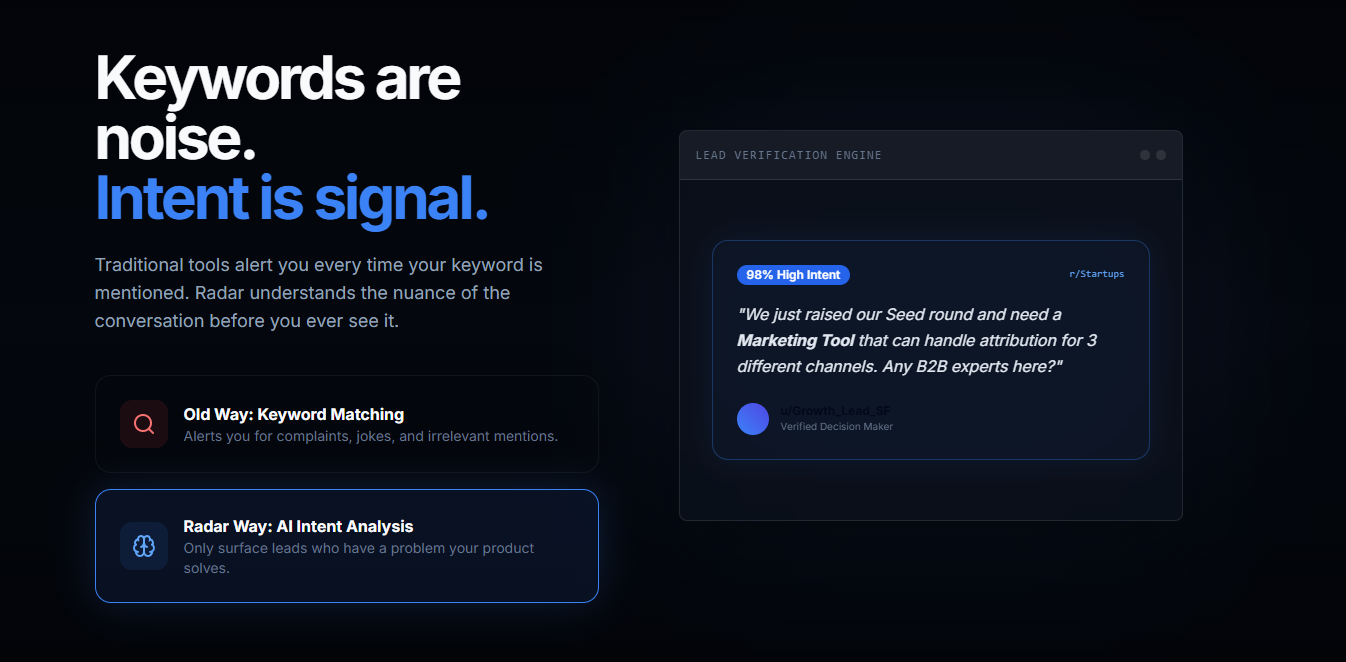
They built guardrails, payments, and UX faster than I could explain the next idea.

Next Idea Tech turned my hacked-together prototype into something investors and customers actually trust. They owned the UX, dev, and infra like an in-house team.

Leo F.
Founder, Radar
Frequently asked

Frequently asked about hiring nearshore LLM engineers

Short answers for the role-disambiguation questions buyers ask before they commit to a hiring path.

What's the difference between an LLM engineer and a generative AI engineer?
Most companies use the terms interchangeably. For this page, LLM engineer means a production builder for language-model systems: prompts, RAG, evals, agents, structured outputs, and model integrations. If the roadmap centers on text-heavy workflows, this is the role to hire.
How is an LLM engineer different from an ML engineer?
An ML engineer builds and trains models on your proprietary data - classic problems like ranking, recommendation, fraud detection, and forecasting. An LLM engineer works with existing foundation models like Claude, GPT, and Llama, then builds production systems around them: RAG, evals, prompt orchestration, and agents. If you're shipping AI features on top of existing models, hire LLM; if you have proprietary data and a roadmap to build custom models, hire ML.
Do your LLM engineers know Claude, OpenAI GPT, Llama, and open-source models?
Yes. We vet specifically for fluency across commercial APIs like OpenAI, Anthropic, and Google, plus open-weight models like Llama, Mistral, and Qwen. The senior engineers we place have shipped production work against at least two of those model families.
How long does it take to hire a senior LLM engineer through Next Idea Tech?
First interviews happen within 72 hours, and a signed engagement can be live in under 14 days. We maintain a pre-vetted bench, so we are not starting from a cold sourcing pipeline.
What's the cost difference vs hiring a senior LLM engineer in the US?
Senior LLM engineers in NY or SF can command $200K-$310K base, with total compensation reaching $400K+ once equity is included. Equivalent senior LATAM LLM engineers - same production experience, same US time zone, strong English - run $75K-$110K all-in including benefits and EOR fees. That is a 50-70% reduction.
Will an LLM engineer integrate with our existing codebase, evals, and CI?
Yes. Nearshore staff augmentation means the engineer joins your team - your repos, your Jira, your Slack, your eval harness, your CI pipeline. From day one, the engineer commits code under your review standards.
How do you handle IP, data, and compliance for LLM work?
We sign IP assignment and NDAs directly with every engineer before placement. We act as Employer of Record across LATAM, handling local labor law, payroll, taxes, and benefits. For regulated industries, we layer SOC2-aligned access controls, BAAs where applicable, and data residency options.

Get started

Tell us what you're building. We'll match in 72 hours.

One-paragraph brief on your product, stack, role, and timeline. We'll line up matched pre-vetted LLM engineers quickly, often within 72 hours.

  • First profiles in 72 hours
  • 14-day replacement or refund window
  • Direct line to the founder, no account-management layer
  • No spam, no long sales process
What are you hiring for?
Monthly budget per hire
Get matched with LLM engineers →